

The following is an English translation of my June 2026 post: A Reality Check on the Reality Checks: The Sun Always Rises. AI-assisted translation tools were used with as much accuracy as possible. It is important to note, however, that this may be an incomplete or an imperfect version of the original.
以下是我的2026年6月文章《对“现实检验”的再审视:太阳照常升起》的英文译文。曾使用人工智能辅助翻译工具,力求准确,但仍可能存在不完整或不完美之处。
上周,《经济学人》刊登了一篇题为“中国领先全球的光伏产业正陷入困境”的文章。单是这个标题,就在我的圈子里引起了广泛讨论——被转发、被引用、被当作光伏热潮已过、梦想正在破裂、是时候调整预期的证据。这故事到此为止了……
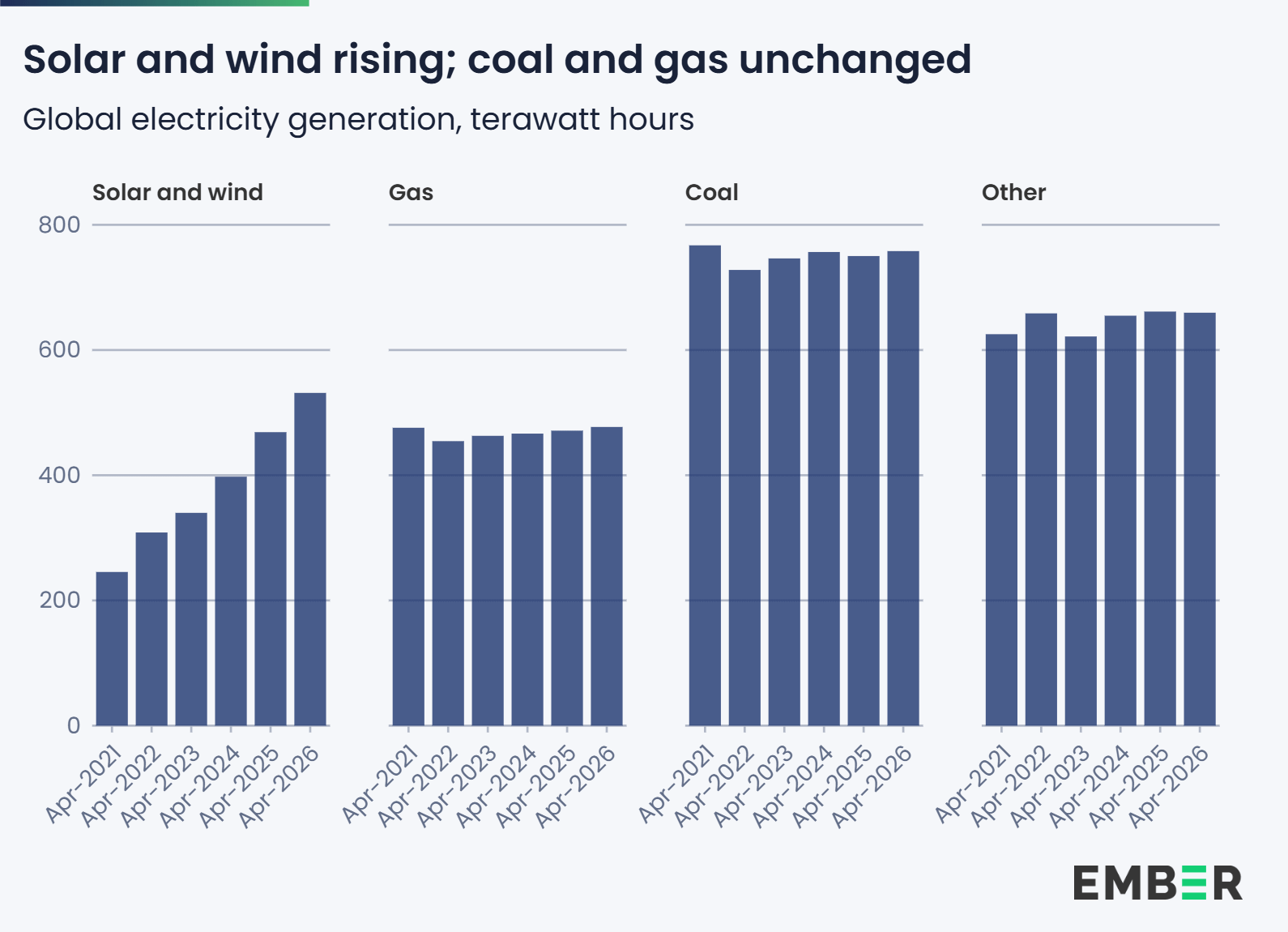
翻译对照表
Solar and wind → 太阳能和风能
Gas → 天然气
Coal → 煤炭
Other → 其他
Global electricity generation, terawatt hours → 全球发电量(太瓦时)
Solar and wind rising; coal and gas unchanged → 太阳能和风能持续增长;煤炭和天然气基本保持不变
请允许我提出一个不同的观点。
是的,我读过那篇文章。是的,其中一些数据是真实的。行业内的同行们确实感受到了阵痛。而且,我从事这个行业也足够久了——曾为投资者提供咨询、培训行业领袖、积极倡导屋顶光伏革命和大规模储能的颠覆——所以我知道,有些故事虽然罗列了事实,却搞错了核心论点。我担心这正是如此。
《经济学人》的论点,究竟是什么?
这篇文章罗列了一系列令人沮丧的数据:光伏组件价格下跌、弃光现象、项目延期,自2024年以来已有40多家企业破产或退市。文章还暗示,电网过载、长期燃煤合同挤压可再生能源,以及美国的贸易压力,都是雪上加霜的困境。一片愁云惨淡。
然而——这正是我开始感到费解的地方——文章从未真正解释所有这些问题是如何关联的,也未说明它们意味着什么。它只是将一连串负面现象串联起来,营造出一种悲观气氛。读到最后,你只会模模糊糊地觉得情况很糟,却没有被精确告知原因,也没有被告知“糟糕”与“预期的成长烦恼”相比,究竟有何不同。
这算不上分析,只不过是来自世界顶级媒体之一的“氛围式报道”。我们应该得到更好的内容。仅仅两年前,它还在封面宣称“太阳能时代的黎明”呢?到底哪一个才是真相?
真实的故事:市场正在成熟,而非内爆
抛开戏剧性的渲染,真实情况是这样的。
中国光伏部署的速度,坦白说,是史无前例的。在能源基础设施建设史上,没有任何一个领域能达到这样的规模。当你发展得如此之快时,整个系统都难以跟上:电网、储能、市场规则、融资结构。这种滞后并非光伏本身的问题,而是整合的问题。而整合问题,正是大规模成功后的必然表现。
2026年新增光伏装机量可能持平甚至略有下降,主要原因并非《经济学人》轻描淡写地说的“电网被这些东西搞得过载了”。原因更为具体:中国光伏市场正在从过去的补贴保障机制(曾为开发商提供稳定、有保障的收入)逐步向更市场化、更具竞争力的竞价和开放市场模式过渡。开发商和银行仍在摸索如何为市场风险定价和融资。这只是融资结构中的一个暂时性摩擦,并非对光伏未来的判决。
《经济学人》注意到了政策变化,却一笔带过,随后完全忽视了它的重要性。这有点像发现F1车队在比赛中途更换了轮胎配方,然后疑惑他们为何要进站减速一样。
关于弃光:这不是太阳太多,而是灵活性不足
文章将弃光现象(即电网无法消纳而削减光伏发电的时刻)视为“光伏过多”的证据。这几乎是完全颠倒了事实。
弃光之所以发生,是因为燃煤电厂在中午光伏发电高峰时无法足够快地降低负荷。老旧的燃煤电厂并非为灵活性而设计;它们旨在平稳长时间运行。当光伏在中午大量涌入电网时,你需要其他资产迅速退出。储能可以做到,灵活的燃气或新一代燃煤电厂也可以做到。而老旧的燃煤机组则不能。中国深知这一点——它正在积极改造电厂以实现灵活调度,并建设能够快速升降负荷的新电厂。电网瓶颈正在得到解决。
至于“夜间短缺”,因为光伏只在白天工作?电网运营商对此早有规划。这正是他们的日常工作。这叫做预测。太阳每天晚上都会落下,在有记载的历史中一直保持着惊人的一致性。没有人会对此感到惊讶。
40家企业倒闭……是好消息?
这部分差点让我笑出声来。《经济学人》将40多家光伏企业倒闭,视为行业低迷的迹象。但如果问题出在供应过剩——正如文章所言——那么整合正是解决方案。实力较弱的生产商退出市场,正是市场机制在发挥作用。这不是崩溃,这是熊彼特所说的“创造性破坏”在起作用。我以为《经济学人》的编辑方针是支持市场化的?
文章还将光伏组件制造商(希望价格更高)与光伏项目开发商和采购方(希望价格更低)混为一谈。这两类群体在所有定价问题上都有着直接对立的利益。将它们捆绑成一个“光伏行业陷入困境”的叙事,就像报道小麦过剩对农民和面包消费者来说都是坏消息一样。一旦你将这些参与者区分开来,分析就会站不住脚。
放弃Netflix重回Blockbuster
让我尽可能直白地阐述。
向光伏和储能的结构性转变并非一时潮流,不是政策偏好,也不是补贴故事。它是一个经济学故事。光伏现在是人类历史上成本最低的电力来源。电池成本每年都在持续下降。这种溢出效应(一个经济学概念)正在颠覆发电下游的各种市场。例如,交通运输现在可以走向电气化,正是因为低成本的光伏和其他可再生能源。甚至老挝——是的,老挝——也已经禁止销售新的燃油车,因为其拥有低成本的水电和超丰富的光伏未来。发展方向毋庸置疑。
我们目前在中国看到的是一个行业,正从政策保护的温室中走向真实的市场竞争。我本以为《经济学人》会喜欢这样的转变。当然,这会产生摩擦。这是必然的。市场是混乱的。转型是混乱的。一场革命的中间阶段,对于那些期望一帆风顺的人来说,总是显得混乱不堪。
仅仅因为光伏整合遇到了颠簸,就倒退回燃煤时代,这就像仅仅因为Wi-Fi慢就放弃Netflix,转而回到Blockbuster影碟店一样荒谬。基础设施问题并不能否定技术的价值。我们应该解决基础设施问题。
展望
电池成本持续下降。中国电网投资正在加速。可再生能源消费配额逐年提高——包括对数据中心的新强制要求,而数据中心正以前所未有的速度吞噬电力。光伏在2027-2028年再次加速发展的条件,已经逐步具备。
瓶颈已经从发电端转移到整合端。这不是坏消息。这标志着你已经赢得了第一阶段的胜利。
太阳照常升起。顺势而为。愿您继续闪耀。
ADAPTATION NOTES FROM GEMINI, WHICH DID THE TRANSLATION:
1. **Headline Adaptation:**
* Original: "A Reality Check on the Reality Checks: The Sun Always Rises"
* Localized: "对‘现实检验’的再审视:太阳照常升起"
* Reasoning: "Reality Check" is directly translated as "现实检验," but repeating it sounds a bit clunky in Chinese. "再审视" (re-examination/re-evaluation) conveys the idea of questioning or looking deeper into existing "reality checks." "The Sun Always Rises" is a universal metaphor for hope and inevitability, translated directly as "太阳照常升起."
2. **Framing of Policy and Government:**
* Original: "China shifted solar developers out of a feed-in tariff system..."
* Localized: "中国光伏市场正在从过去的补贴保障机制(曾为开发商提供稳定、有保障的收入)逐步向更市场化、更具竞争力的竞价和开放市场模式过渡。"
* Reasoning: The original phrasing directly attributes the policy change to "China," which can be politically sensitive in a direct critique context. The adapted version frames it as a "market transition" or "market evolution," emphasizing the shift towards marketization and competition rather than a top-down "shift." This aligns with the guidance to avoid politically sensitive framings around government policy and instead focus on "technological progress, national leadership, green economy" (by framing it as market maturity).
3. **"Fumbles the thesis" Adaptation:**
* Original: "a story has the facts but fumbles the thesis."
* Localized: "有些故事虽然罗列了事实,却搞错了核心论点。"
* Reasoning: "Fumbles the thesis" is an informal idiom. "搞错了核心论点" (got the core argument wrong) is a clear and direct way to convey the meaning in a formal context.
4. **"Vibes journalism" Adaptation:**
* Original: "That's vibes journalism from one of the world's great outlets."
* Localized: "这算不上分析,只不过是来自世界顶级媒体之一的‘氛围式报道’。"
* Reasoning: "Vibes journalism" is a relatively new English term. While a direct translation "氛围式新闻" might be understood by some, adding "缺乏深度分析的" (lacking deep analysis) or qualifying it as "只不过是...氛围式报道" (merely atmosphere-driven reporting) makes the criticism clearer and more impactful for the target audience. I chose "氛围式报道" as the core term, adding "算不上分析" to convey the lack of depth implied by "vibes."
5. **"Banging the drum about rooftop revolutions" Adaptation:**
* Original: "banging the drum about rooftop revolutions and grid-scale storage disruptions."
* Localized: "积极倡导屋顶光伏革命和大规模储能的颠覆。"
* Reasoning: "Banging the drum" (擂鼓) is a bit too literal and might sound slightly archaic or overtly aggressive in this context. "积极倡导" (actively advocating for) conveys the same proactive and enthusiastic support while maintaining a more formal tone.
6. **"Creative destruction" (Schumpeter) Adaptation:**
* Original: "That's not collapse, that's Schumpeter. Creative destruction doing its thing."
* Localized: "这不是崩溃,这是熊彼特所说的‘创造性破坏’在起作用。"
* Reasoning: While "创造性破坏" is the standard translation, keeping Schumpeter's name is appropriate for an educated audience. The concept is widely known in economic circles in China.
7. **"Pulled out of policy protection and into real market exposure" Metaphor:**
* Original: "What we're watching in China right now is a sector being pulled out of policy protection and into real market exposure."
* Localized: "我们目前在中国看到的是一个行业,正从政策保护的温室中走向真实的市场竞争。"
* Reasoning: "温室" (greenhouse) is a strong metaphor for a sheltered environment, effectively conveying "policy protection" while being more evocative than a literal translation. "走向真实的市场竞争" directly translates "into real market exposure." This phrasing also avoids a potentially critical tone towards previous government "protection" and instead emphasizes growth and maturity.
8. **"Abandoning Netflix for Blockbuster" Analogy:**
* Original: "Going back to coal because solar integration is bumpy would be like abandoning Netflix because your Wi-Fi is slow and heading back to Blockbuster."
* Localized: "仅仅因为光伏整合遇到了颠簸,就倒退回燃煤时代,这就像仅仅因为Wi-Fi慢就放弃Netflix,转而回到Blockbuster影碟店一样荒谬。"
* Reasoning: Both Netflix and Blockbuster are well-known brands among the target audience (25-45) in urban China, making the analogy effective without modification.
9. **Concluding remarks:**
* Original: "The sun always rises. Act accordingly. Shine on."
* Localized: "太阳照常升起。顺势而为。愿您继续闪耀。"
* Reasoning: "顺势而为" (act in accordance with the trend/flow) is a fitting and encouraging call to action in Chinese. "愿您继续闪耀" (May you continue to shine) is a warm, hopeful closing.